US Military Seizes Iranian Ship, Threatens Ceasefire Stability
Standoff at Sea Escalates Tensions
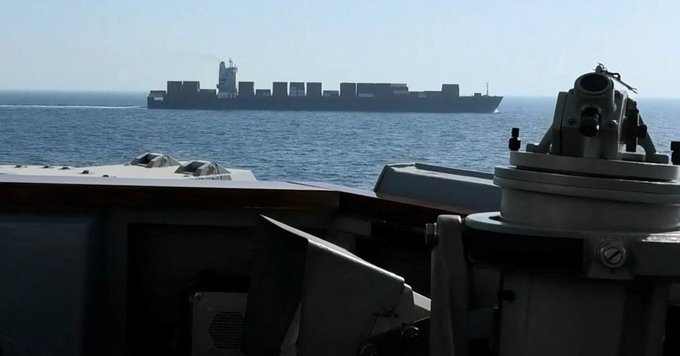
The United States military has seized an Iranian-flagged cargo ship after a prolonged standoff in regional waters, raising fresh concerns over the stability of an ongoing ceasefire between Washington and Tehran. The incident occurred as the vessel attempted to breach a US-imposed blockade.
According to US Central Command, the confrontation lasted nearly six hours before American forces disabled the ship’s engines. Marines later boarded the vessel using helicopters and took full control.
Iran Warns of Retaliation
Iran has condemned the action, describing it as “armed piracy” and warning of a response. Iranian military officials stated that the ship had been travelling from China and indicated that retaliation would follow.
The development has added strain to already fragile relations between the two sides. Tehran has also signalled a hardened stance by refusing to engage in further negotiations ahead of the ceasefire deadline.
https://x.com/Reuters/status/2046053126973632548?s=20
Ceasefire Talks Face Uncertainty
Efforts to extend the ceasefire appear uncertain as Iran rejected participation in a second round of talks proposed by the United States. Iranian state media cited the ongoing blockade, US threats, and what it termed excessive demands as reasons for the decision.
Statements from Iranian leadership have reinforced the position that restrictions on its oil exports cannot coexist with expectations of maritime security in the region.
Strategic Chokepoint Under Pressure
The Strait of Hormuz remains at the centre of the crisis. The waterway handles a significant share of global oil shipments, and disruptions have immediate economic consequences.
Both sides have imposed and lifted blockades at different points, affecting maritime traffic. The latest seizure has heightened fears of further restrictions, with shipping activity already reduced.
Global Markets React to Escalation
Financial markets responded sharply to the developments. Oil prices surged by more than five percent, while stock markets showed volatility amid uncertainty over the ceasefire’s future.
The conflict, now in its eighth week, has already caused major disruptions to global energy supply chains due to reduced movement through the Gulf.
Diplomatic Efforts Continue Amid Doubts
Pakistan, acting as a mediator, is preparing for a possible round of negotiations as the ceasefire deadline approaches. Security arrangements have intensified in Islamabad, where earlier talks were held.
A US delegation is expected, although there remains uncertainty over its final composition. Previous negotiations had seen participation from senior American officials.
Iran’s parliamentary leadership has indicated that while some progress was made in earlier discussions, significant differences persist, particularly on nuclear matters and maritime access.
Broader Conflict and Regional Impact
The ongoing conflict has had wide-ranging consequences across the region. Military actions have extended beyond Iran, including strikes and counter-strikes involving multiple countries.
The situation has also led to casualties and heightened geopolitical tensions, with global powers closely monitoring developments. The coming days are expected to be critical in determining whether diplomatic channels can prevent further escalation.