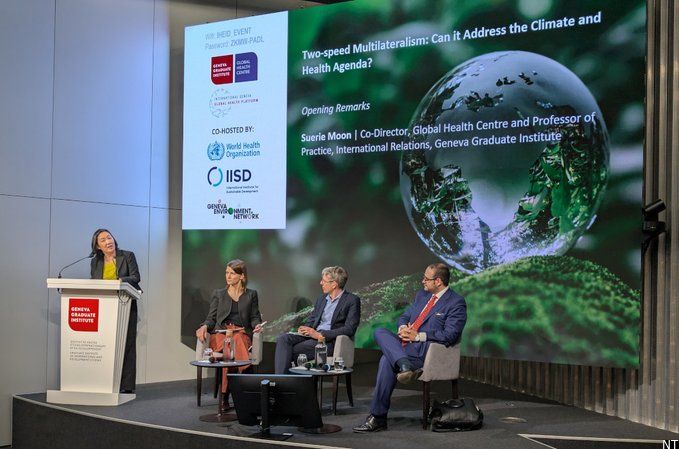
Global health and climate diplomats gathered in Geneva on March 30 to address a growing crisis in traditional United Nations structures. The panel, hosted by the Global Health Centre, warned that the post-war international order is facing a "moment of rupture" as consensus-based negotiations on pandemic preparedness and fossil fuel transitions reach a stalemate.
To bypass these diplomatic deadlocks, experts are now advocating for "two-speed multilateralism." This model allows "coalitions of the willing" to implement rapid climate and health actions while maintaining universal UN frameworks for long-term legal legitimacy. The move seeks to prevent individual nations from using veto powers to obstruct global progress.
https://x.com/HealthPolicyW/status/2040084407340642622?s=20
Alternative Governance and Global Deadlocks
The shift follows stalled Pathogen Access and Benefit Sharing (PABS) negotiations and sluggish climate policy implementation. Miguel Ruiz Botero, a representative from the Colombian UN Mission, stated during the panel that consensus has been "weaponised" by a few countries to block essential advancements.
In response, Colombia is set to host the Santa Marta Conference on April 28-29. This summit, co-hosted with the Netherlands, operates outside traditional UN architecture to establish a pathway for transitioning away from fossil fuels. This "second tier" of diplomacy focuses strictly on mobilizing finance and deploying technical solutions at scale.
WHO Supports Parallel Diplomatic Tracks
The World Health Organization (WHO) has signaled unusual support for these parallel initiatives. Dr. Diarmid Campbell-Lendrum, head of the WHO climate change unit, argued that if subsets of countries can move the agenda forward positively, such efforts must be backed. He noted that the health benefits of reduced air pollution alone would self-finance the transition from fossil fuels.
Following the exit of the United States from certain frameworks, observers suggest the WHO is navigating a new political landscape with reduced diplomatic pressure. This has allowed the agency to embrace more pragmatic, multi-speed agreements that were previously viewed with hesitation.
Integration of Health into Climate Dossiers
The momentum for this dual-track strategy will continue at the 79th World Health Assembly in May. While the official agenda may be restricted by bureaucracy, Türkiye and Brazil are scheduled to host high-level side events to bridge the gap between health and climate policies.
This coordination is aimed at the COP31 summit in November 2026. Experts emphasize that while two-speed multilateralism carries risks of excluding smaller developing nations, it has historical precedents like the Ottawa Process for landmines. By using health metrics to measure climate impacts, diplomats hope to stabilize the fractured international order through actionable results.