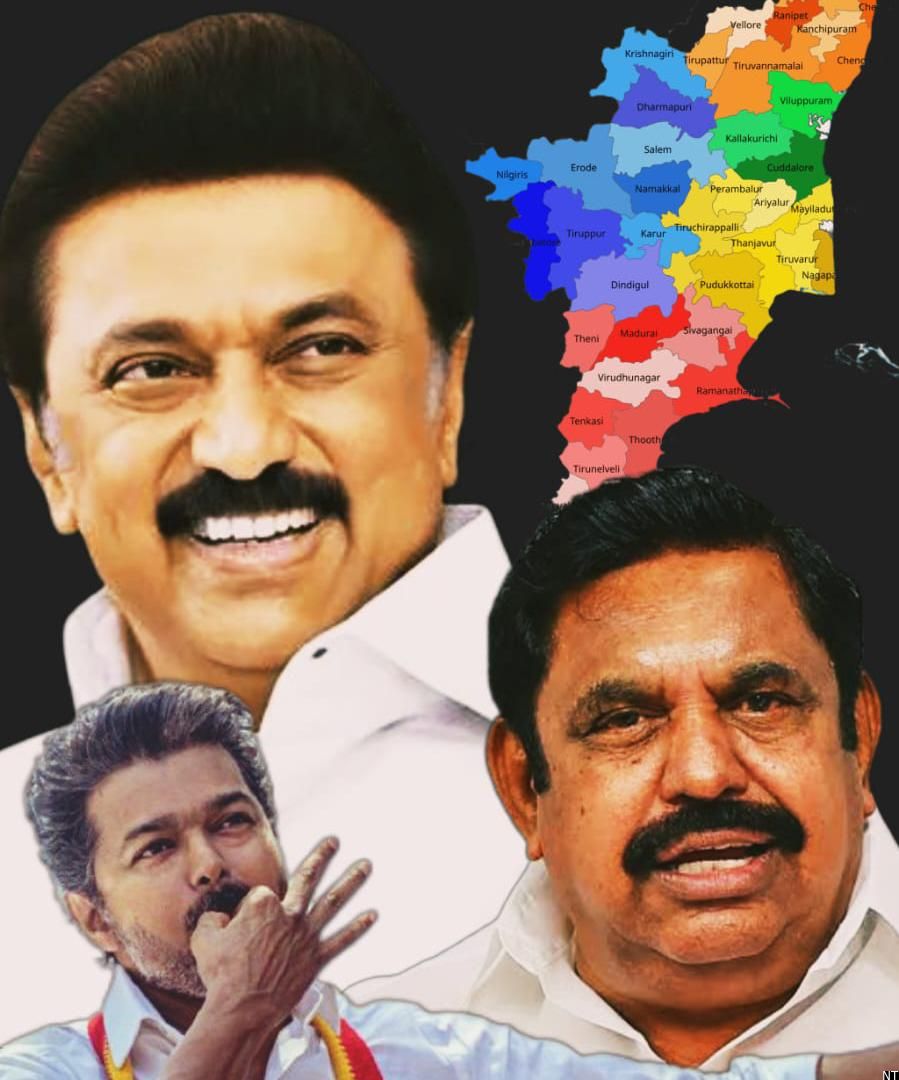
Tamil Nadu Governor Probes Government Formation Amid Political Uncertainty
Chennai: The Tamil Nadu Governor has delayed inviting any party to form the government, creating a complex scenario after the recent state assembly elections. Political analysts say this latest update highlights growing uncertainty as no single party secured a clear majority, prompting a detailed review of all possible alliances.
Incident Details: Election Outcome and Party Positions
Following the elections, the Tamil Nadu political landscape remains fragmented. The party led by Vijay, TVK, emerged as the single largest party but fell short of the magic figure required to form the government independently. DMK, led by M.K. Stalin, secured the second-highest number of seats, while the Anna DMK, under Palaniswami, claimed a significant third position.
The Governor’s office has cited the absence of a clear majority as the reason for not immediately inviting any party to stake a claim. This has triggered multiple strategic maneuvers among parties exploring coalition options.
Political Parties’ Response and Options
TVK (Vijay) has several potential courses of action, including forming a coalition with Congress and left-leaning parties, seeking support from Anna DMK to counter BJP influence, or approaching the DMK for a joint government. Alternatives include legal recourse by petitioning the Supreme Court or orchestrating resignations of members to reassert public mandate.
DMK has reportedly weighed aligning with Anna DMK or providing tacit support to TVK. Another possibility includes leveraging Rajinikanth’s influence to prevent TVK from forming the government. Analysts note that DMK may also choose to remain silent temporarily, awaiting clarity on political developments.
Anna DMK, with 47 seats, could join either DMK or TVK to form a government, potentially negotiating for a dominant share in power. Their decisions are also influenced by the BJP, which seeks to minimize Congress participation in the new administration.
Congress, with only five seats, remains a minor player but could act as a critical support party, particularly in coalition arrangements with TVK.
Governor’s Role and Official Statement
An official statement from the Governor’s office confirmed that invitations to form the government will be considered only after reviewing all possible combinations. Authorities emphasized adherence to constitutional procedures, ensuring that the party or coalition with the highest probability of securing a stable government is given preference.
Tamil Nadu has a history of coalition politics, with multiple regional parties influencing governance outcomes. TVK, DMK, and Anna DMK have been central to the state’s power dynamics, while the BJP and Congress remain secondary actors with strategic influence.
Recent elections in southern India, including Kerala and Karnataka, have demonstrated the growing importance of coalition arrangements. Analysts suggest that any government formation in Tamil Nadu must consider alliances to ensure stability and public confidence.
Political experts say the coming days will be crucial in determining which party or coalition forms the next government. The Governor’s decision-making process and the negotiations among TVK, DMK, Anna DMK, and Congress will likely set the tone for the state’s political direction.