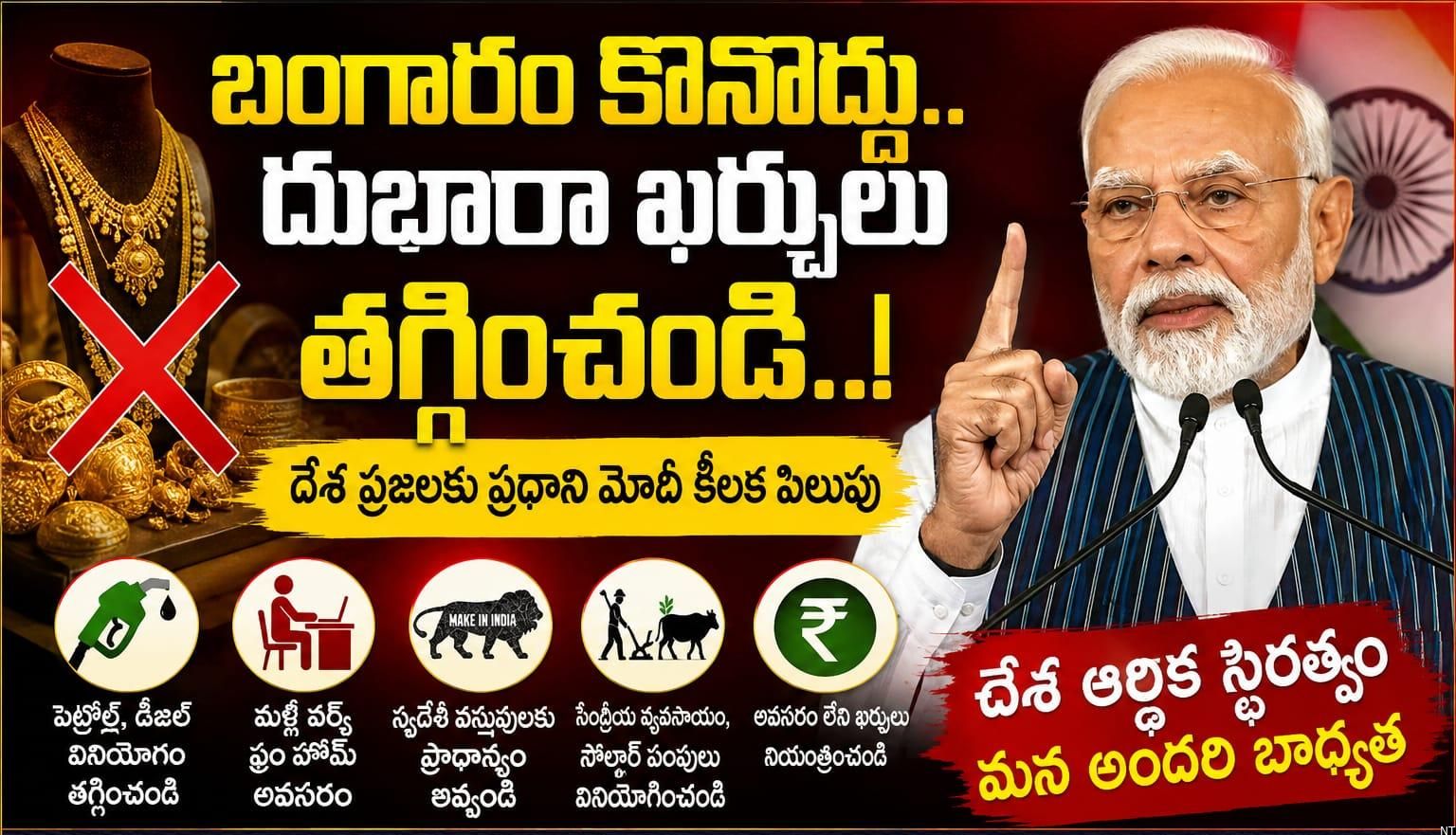
PM Modi Calls for Reduced Gold Purchases Amid Economic Pressure
Narendra Modi has reportedly urged citizens to avoid unnecessary spending and reduce gold purchases as India faces growing international economic pressure, rising crude oil prices, and concerns over foreign exchange reserves. The latest update emerged following his reported remarks during a BJP public meeting at Secunderabad Parade Ground in Hyderabad.
According to political discussions around the event, the Prime Minister stressed the need for economic discipline and public cooperation to maintain financial stability during a period of global uncertainty. The comments have triggered debate over household spending patterns, fuel consumption, and import dependence.
Gold Purchases and Foreign Exchange Concerns
The primary focus of Modi’s reported appeal was on reducing gold imports. India remains one of the world’s largest importers of gold, and heavy imports are seen as a burden on foreign exchange reserves.
The Prime Minister is said to have asked citizens to avoid buying gold for at least a year unless absolutely necessary. He reportedly advised people to limit purchases made during weddings, festivals, and other celebrations.
Political observers quoted Modi as saying that previous generations supported the nation during difficult periods by donating gold, and that citizens can now contribute by reducing consumption temporarily. The statement has become a major talking point in economic and political circles.
Fuel Consumption Reduction Among Key Suggestions
Another major aspect of the reported speech focused on fuel savings and reducing dependence on imported crude oil. Modi is said to have highlighted the impact of rising international crude prices and ongoing tensions in West Asia on the Indian economy.
He reportedly encouraged citizens to use public transport systems such as metro rail services and buses instead of relying heavily on private vehicles. Carpooling and increased adoption of electric vehicles were also mentioned as practical measures.
The Prime Minister is also believed to have called for greater use of goods trains in freight transport to reduce diesel consumption. According to discussions around the event, he reportedly said that saving petrol and diesel directly supports the national economy.
Work From Home Mentioned in Economic Context
The reported remarks also referred to the work-from-home model that became common during the COVID-19 pandemic. Modi is said to have pointed out that remote working significantly reduced fuel usage, traffic congestion, and pollution levels.
He reportedly suggested that online meetings and virtual work systems may again become useful if economic conditions require fuel conservation measures. The comments have added to discussions on whether hybrid work systems could continue beyond corporate convenience.
Swadeshi Products and Spending Control Highlighted
The Prime Minister reportedly stressed the importance of supporting domestic products and reducing reliance on foreign goods. He is said to have argued that strengthening local manufacturing can help improve India’s economic resilience during uncertain global conditions.
The speech also reportedly included advice against luxury spending, destination weddings, and expensive foreign tours for the time being. Reducing foreign currency outflow was described as an important national priority.
Suggestions for Farmers and Energy Savings
Modi is also believed to have addressed farmers during the speech, advising them to reduce the use of chemical fertilisers and pesticides while encouraging organic farming practices.
According to political sources, he suggested increasing the use of solar-powered pumps to reduce diesel and electricity consumption in agriculture. The move was linked to broader efforts aimed at energy savings and sustainable farming.
PM Modi Economic Appeal Draws Attention Nationwide
The reported appeal by Narendra Modi comes at a time when global economic uncertainty, crude oil volatility, and inflation concerns continue to affect multiple economies. While no official policy announcement has been made, the remarks have gained attention as part of a wider conversation on economic discipline, fuel conservation, and domestic production.
The latest update has also intensified discussions over public spending habits, gold imports, and long-term economic planning in India.