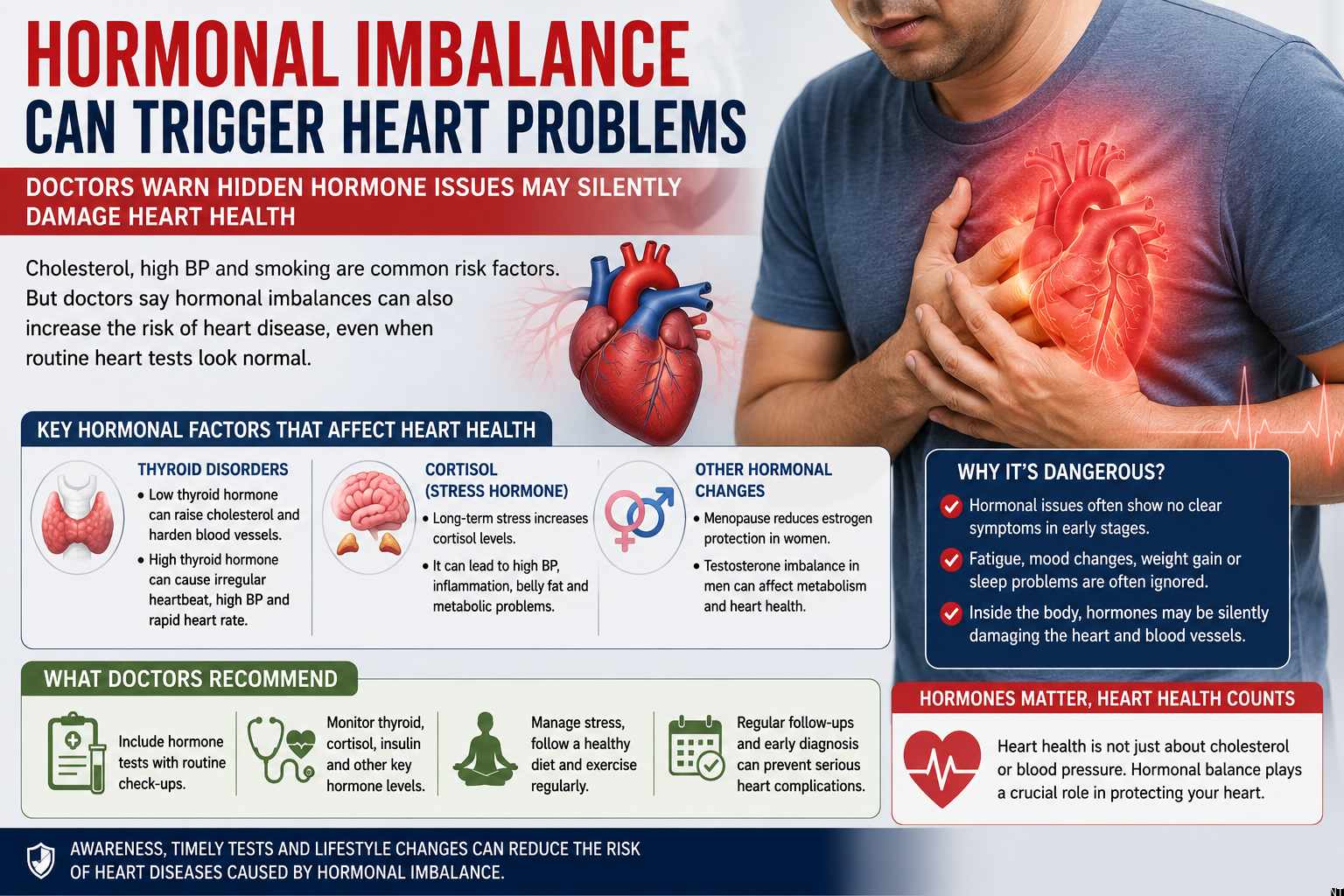
Doctors Warn Hormonal Imbalance Can Trigger Serious Heart Problems
Heart problems are commonly associated with cholesterol, high blood pressure, smoking, and lack of exercise. However, doctors are now warning that hormonal imbalance may also silently increase the risk of heart disease, even when routine heart tests appear normal.
The latest update from medical experts highlights that hidden hormone-related issues can gradually affect heart health without showing major symptoms in the early stages. Specialists say awareness about hormone-linked heart problems remains low despite increasing metabolic and stress-related disorders.
Thyroid Disorders Linked to Heart Problems
Doctors identify thyroid disorders as one of the major hormonal conditions affecting heart health. Both hypothyroidism and hyperthyroidism can create serious complications related to blood circulation and heart rhythm.
Medical experts say low thyroid hormone levels may increase cholesterol levels and harden blood vessels over time. On the other hand, excessive thyroid hormone production can lead to irregular heartbeat, rapid heart rate, and high blood pressure.
According to doctors, many thyroid-related symptoms often go unnoticed. Fatigue, sudden weight gain or loss, and low energy levels are frequently ignored as stress or ageing-related issues instead of possible hormone imbalance.
Stress Hormone Cortisol May Increase Heart Disease Risk
Medical specialists also warn about the impact of cortisol, commonly known as the stress hormone. While cortisol helps the body manage stress temporarily, consistently high cortisol levels may damage overall cardiovascular health.
Doctors say prolonged stress can increase blood pressure, inflammation, abdominal fat accumulation, and metabolic problems. These conditions may raise the risk of heart attack and stroke over time.
The official statement from health experts notes that multiple hormonal disorders can combine and worsen heart-related complications. Insulin resistance, for instance, may damage blood vessels and accelerate fat deposition inside arteries.
Menopause and Testosterone Imbalance Also Affect Heart Health
Experts say hormonal changes during menopause can reduce the natural protection women receive against heart disease. Lower estrogen levels after menopause may gradually increase cardiovascular risk among women.
Similarly, testosterone imbalance in men may also influence metabolic health and indirectly affect heart function. Doctors state that hormonal imbalance should not be viewed separately from other lifestyle-related conditions.
Medical professionals further explain that modern lifestyle patterns, rising stress levels, and metabolic disorders are increasing the importance of hormone-related screening in heart care.
Early Symptoms Often Remain Undetected
One of the major concerns in hormone-linked heart problems is the absence of clear symptoms during the early stages. Signs such as sleep disturbances, mood changes, tiredness, and unexplained weight gain are often dismissed as routine lifestyle issues.
Doctors now recommend that hormone tests should also be considered alongside cholesterol and blood pressure screening, especially in patients with unexplained hypertension, irregular heartbeat, or metabolic conditions.
Experts say early diagnosis can help control many hormone-related complications through medication, lifestyle changes, stress management, and regular medical monitoring. They stress that heart health is connected not only to blood vessels and cholesterol but also to the body’s hormonal balance.
The latest update from doctors underlines that hormonal imbalance and heart problems are increasingly linked in today’s high-stress lifestyle environment. Medical experts continue to advise regular health check-ups and timely diagnosis to reduce long-term cardiovascular risks.