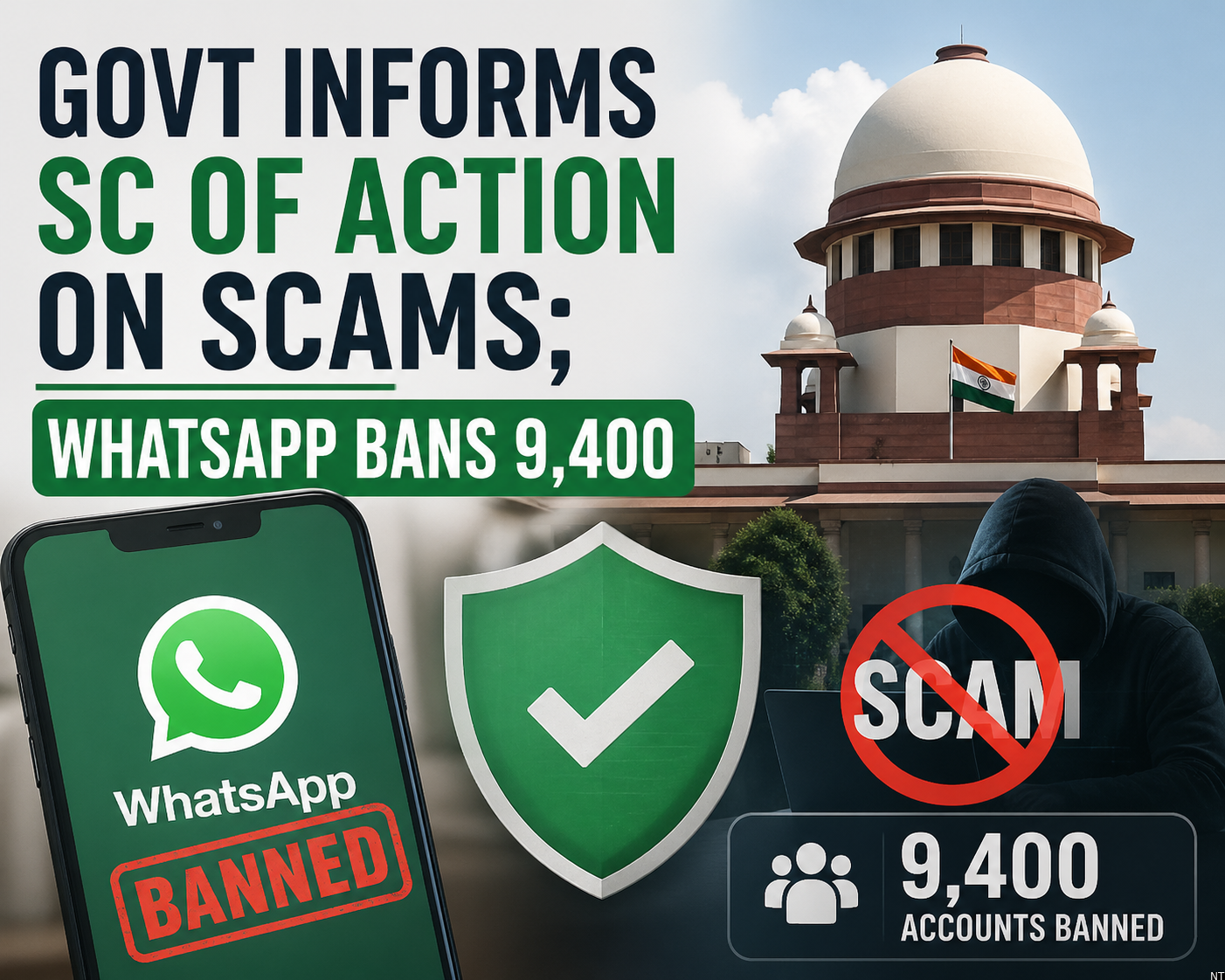
Centre Details Multi-Agency Action in Supreme Court
The central government has informed the Supreme Court about a multi-pronged strategy being executed to combat the growing threat of 'digital arrest' scams. The action involves telecom regulators, service providers, the Reserve Bank of India (RBI), tech companies, and the Central Bureau of Investigation (CBI).
A comprehensive status report was filed by the Indian Cybercrime Coordination Centre (I4C) of the Ministry of Home Affairs (MHA). The report, submitted through Attorney General R Venkataramani, details the measures taken since January this year to curb such online frauds.
Background of Court's Intervention
The report was filed in pursuance of a Supreme Court directive from February 9. A bench headed by Chief Justice Surya Kant had taken suo motu cognisance of the rising cases of online fraud, including digital arrests.
The court had ordered the RBI, the Department of Telecommunications (DoT), and other stakeholders to jointly hold a meeting and devise a framework for providing compensation to victims.
WhatsApp Takes Down Fraudulent Accounts
The status report highlights significant enforcement actions by the messaging platform WhatsApp. In response to concerns raised by I4C, the Ministry of Electronics and Information Technology (MeitY), and DoT, WhatsApp initiated a dedicated investigation into digital arrest scams targeting Indian users since January.
Following a rigorous methodology, the company has banned 9,400 accounts allegedly involved in these fraudulent activities. WhatsApp is also deploying new enforcement tools, including logo detection systems to identify and remove accounts using official police or government insignia in their display pictures.
The platform is also considering a new feature to warn users about calls from newly created accounts, a common characteristic of scam profiles. Another proposed measure is to automatically hide profile pictures of suspicious unknown callers.
New Telecom and Banking Safeguards
The DoT and Telecom Service Providers (TSPs) have committed to a stricter timeline for neutralising fraudulent SIM cards. A committee is working on a mechanism to block suspicious SIMs within two to three hours of identification.
A key proposal from a high-level Inter-Departmental Committee, which met on March 12, is the rollout of a Biometric Identity Verification System (BIVS). The DoT has been tasked with implementing this system by December 2026 to enable real-time monitoring of SIM card issuance.
On the financial front, the RBI has finalised a Standard Operating Procedure (SOP) for banks. This directs them to place temporary holds on suspicious transactions to disrupt money mule activities used in these scams.
CBI Investigation and Threshold
The CBI has established a financial loss threshold of ₹10 crore to take over investigations into digital arrest scams. The agency has currently re-registered three major cases under this provision.
These include two cases from Gujarat involving significant financial fraud and a high-profile case from Delhi where a single victim lost ₹22.92 crore.
MHA Seeks Further Directions
The MHA has urged the Supreme Court to issue directions to the DoT and MeitY to ensure compliance from TSPs and WhatsApp on the proposed safeguards. This includes the implementation of a SIM-binding mechanism by WhatsApp, a security feature that links the app's functionality to the physically present, KYC-verified SIM card.