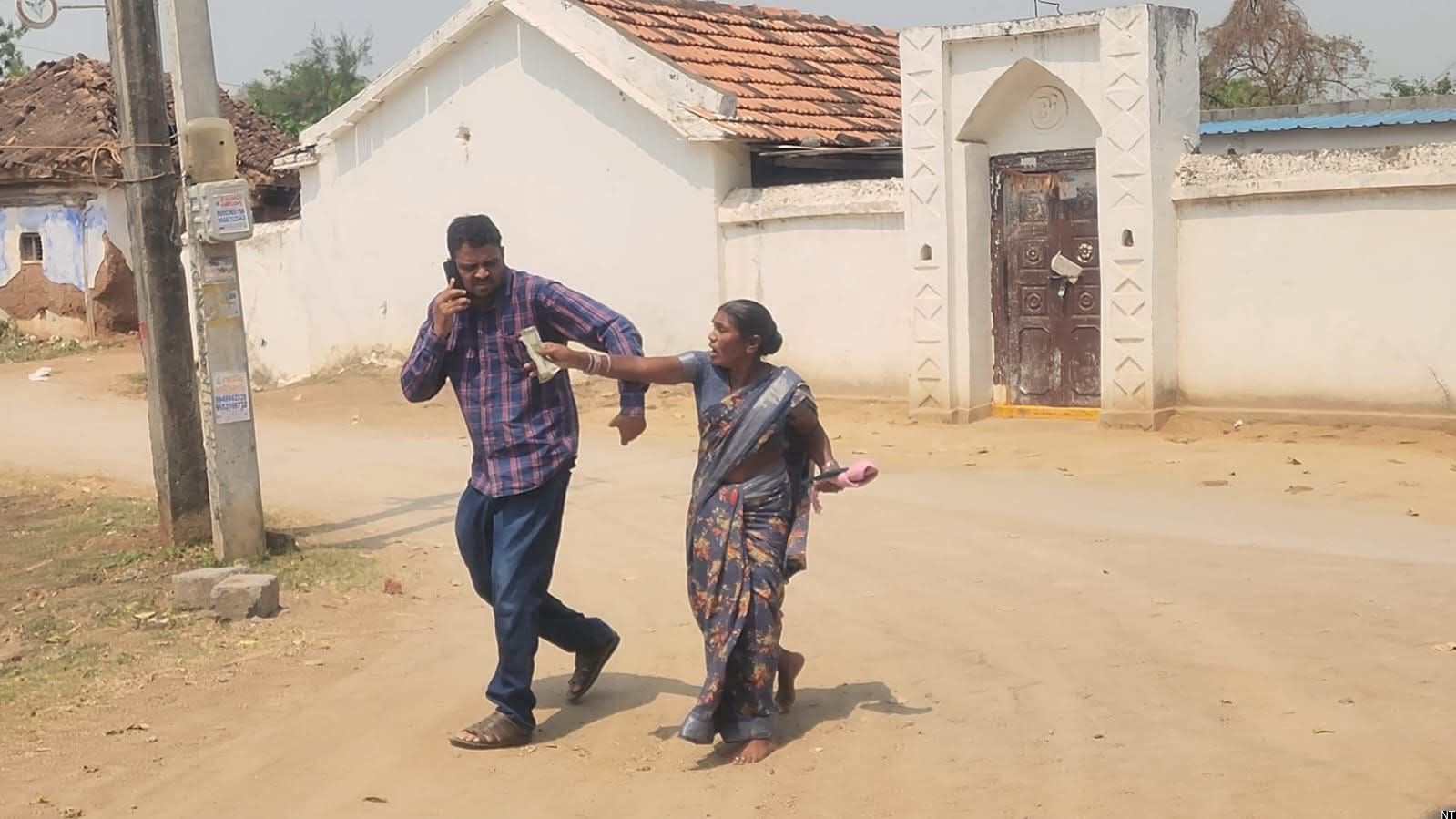
A Desperate Plea: The Face of Government Corruption
A bundle of cash in a poor woman’s trembling hand. The cold facade of a government office before her. With tears in her eyes and a quiver in her voice, she makes a desperate plea: “Here you go, sir… the fifty thousand you asked for… not a single rupee is missing. Will you finally do my work now?” This isn't a scene from a movie; it's a raw, unfiltered look at the reality of bribery in India. The story of Rengunta Gangamma from Nagunur village in Telangana’s Jagtial district exposes the gut-wrenching challenges faced by the most vulnerable when navigating a system plagued by corruption.
The Heartbreaking Story of Rengunta Gangamma
Gangamma, whose husband is Rengunta Raju, was granted a house under the government's Indiramma housing scheme—a program designed to provide shelter for the homeless. For her, it was a lifeline. But a bureaucratic hurdle stood in her way, and it came with a hefty price tag. Village Secretary Arifoddin allegedly demanded a bribe of ₹50,000 for a simple task: uploading the required photos to finalize her application.
A Cycle of Extortion
This wasn't Gangamma's first encounter with corruption. She had already paid ₹30,000 just to get a small parcel of land transferred from her husband's name to her own. Now, she was faced with another demand for ₹50,000 for the house she was legally entitled to. The total, ₹80,000, is an astronomical sum for a family living on the margins. It represents not just money, but a mountain of debt, sweat, and humiliation.
A Question That Shakes the System
In her moment of desperation, Gangamma asked a question that strikes at the heart of this systemic failure. “The government gives houses only to those of us with nowhere else to go,” she cried. “If you demand money for that very house, what are we supposed to do?” Her words highlight the cruel irony of the situation. The very schemes designed to uplift the poor are being used by corrupt officials to exploit them further.
Beyond One Corrupt Official: A Systemic Problem
It’s easy to point the finger at a single official like Arifoddin, but Gangamma's story reveals a much deeper rot. Such incidents persist because of a fundamental breakdown in accountability. A lack of stringent oversight from higher authorities, no accessible channels for filing complaints, and the absence of swift, severe punishment for offenders create an environment where corruption thrives. Gangamma is not alone. Countless others face the same impossible choice: pay the bribe or forfeit the essential services they need to survive.
The Path Forward: Demanding Accountability and Reform
The viral attention on Gangamma’s case demands immediate and decisive action. A thorough, impartial investigation must be conducted, and all officials involved, including Village Secretary Arifoddin, must face strict legal consequences. More importantly, Gangamma must be given the keys to her house without any further delay.
To prevent this from happening again, the system itself must be reformed. We need transparent processes, robust anti-corruption measures, and a culture where victims like Gangamma are seen not as accomplices but as whistleblowers who deserve protection. The ₹50,000 in her hand was not just currency; it was the weight of her tears and her struggle. Her story is a mirror held up to our society, and it’s a call to action we cannot afford to ignore.